
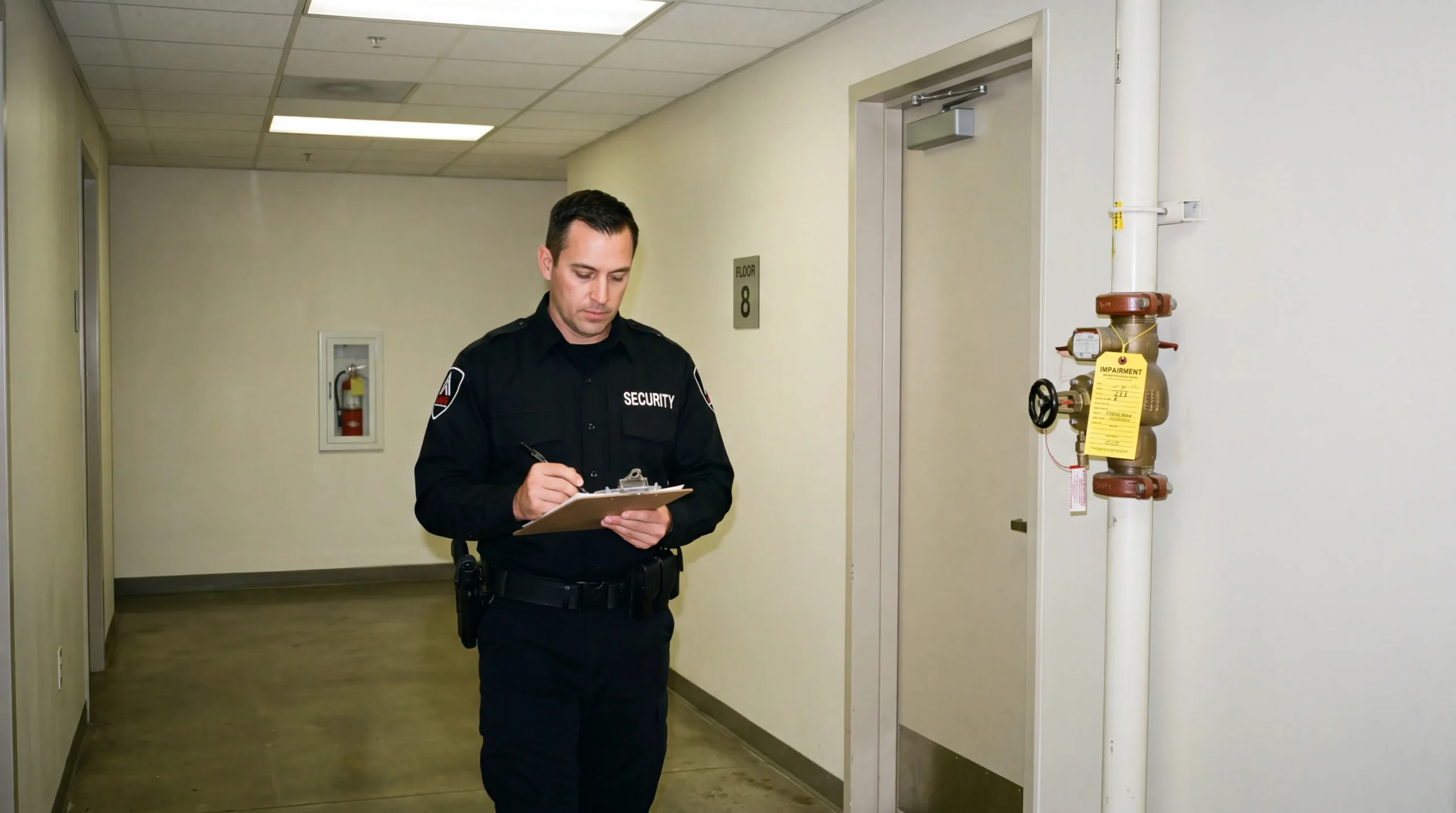
SFFD fire watch compliance refers to the strict requirements set by the San Francisco Fire Department for buildings with impaired fire protection systems, mandating continuous monitoring by trained personnel. This crucial measure ensures occupant safety and property protection, preventing catastrophic incidents and ensuring businesses adhere to local fire codes. When a fire alarm system, sprinkler riser, or standpipe fails inspection or becomes impaired in San Francisco, your building is immediately required to establish a continuous fire watch. This is mandated by SFFD policy and California Fire Code (CFC) §901. Property managers who are unaware of these specific rules often discover their oversight late, typically when a Bureau of Fire Prevention inspector arrives, requesting a comprehensive fire watch log. Understanding and adhering to SFFD fire watch compliance is not just about avoiding fines; it’s about safeguarding lives and property in our dense urban environment.
When is SFFD Fire Watch Compliance Triggered in San Francisco?
The San Francisco Fire Department (SFFD) and the California Fire Code (CFC) have precise guidelines detailing when a fire watch becomes mandatory. These triggers are in place to ensure public safety the moment a building’s primary fire suppression or alarm systems are compromised. Failing to initiate a fire watch when required can lead to severe penalties, including hefty fines and immediate operational shutdowns in San Francisco.
Fire watch is typically required when:
- A fire alarm system is impaired for more than 4 hours in any 24-hour period. This includes any situation where the system is partially or fully offline, undergoing repair, or experiencing malfunctions. The “4-hour rule” is critical; even brief interruptions can accumulate. For instance, if an alarm system in a high-rise residential building in the Financial District is offline for a cumulative five hours due to a faulty sensor or power outage, continuous fire watch must be immediately established.
- A sprinkler system or standpipe is shut down for any maintenance, repair, or modification. This applies universally, regardless of the duration. Whether it’s a routine quarterly inspection or a major pipe replacement in a commercial building in SoMa, if the system is compromised, fire watch is a must. This ensures that even during planned work, occupants remain protected.
- A water flow or supervisory signal is offline during occupied hours. These signals are crucial indicators of system integrity. If they’re not functioning, the SFFD considers the system impaired. This is particularly relevant for buildings with complex systems, such as those found in large office complexes or mixed-use developments across San Francisco.
- Inspection, Testing, and Maintenance (ITM) under NFPA 25 is in progress. Many managers mistakenly believe that routine testing doesn’t require fire watch. However, when fire suppression systems are actively being tested, they are temporarily taken offline or placed in a bypass mode. This direct impairment triggers the need for fire watch. For example, during a quarterly flow test of a sprinkler system in a historic building in Nob Hill, the system is not fully operational, making fire watch essential for SFFD fire watch compliance.
It’s common for property managers to misinterpret these rules, especially concerning routine quarterly tests. If a San Francisco Fire Prevention inspector discovers alarm zones bypassed for testing without an active fire watch in place, a citation is typically issued on the same day. These violations can lead to significant disruptions and costs for your San Francisco property.
Who is Qualified to Perform Fire Watch Services in San Francisco?
The San Francisco Fire Department (SFFD) maintains strict criteria for individuals authorized to perform fire watch duties. This is not a task for just any available staff member; specific training, undivided attention, and clear communication are paramount. Understanding these requirements is key to ensuring proper SFFD fire watch compliance.
Per SFFD regulations, a fire watch must be performed by:
- A trained adult, not assigned to any other duties. This is a critical distinction. The individual’s sole responsibility must be fire watch. This means they cannot simultaneously be the regular onsite security guard who has other patrol routes, a night engineer responsible for building systems, or any other staff member with conflicting tasks. Their entire focus must be on monitoring for fire hazards.
- Equipped with a reliable means of immediate communication. This typically includes a working cell phone or a two-way radio to directly contact the fire department (9-1-1) and building management in case of an emergency. This immediate alert capability is vital in San Francisco’s densely populated areas.
- Capable of walking a documented patrol route at specific intervals. The patrol route must be comprehensive, covering all areas of the impaired system. The SFFD specifies these intervals, usually every 30 minutes for high-rise buildings and every 60 minutes for low-rise occupied buildings. In unoccupied wings or areas, continuous monitoring might be required. These patrols ensure no area is left unchecked for extended periods.
- Must have unhindered access to all areas of the impaired system. The fire watch officer needs keys, access cards, or an escort to immediately reach any part of the building where the fire system is compromised, without delay.
AMB Protective Services understands these stringent requirements. Our fire watch officers are not only fully licensed by the California Bureau of Security and Investigative Services (BSIS license PPO #16681) but also carry a specific Fire Watch endorsement. They undergo rigorous training, background checks, and arrive on-site with the precise log and route paperwork pre-built for seamless SFFD fire watch compliance in San Francisco. Our officers are dedicated solely to fire watch duties, ensuring no distractions compromise safety. We are a fully licensed and insured company ($2M liability insured), providing peace of mind to our San Francisco clients.
What Documentation is Required for SFFD Fire Watch Compliance?
Accurate and thorough documentation is the backbone of effective SFFD fire watch compliance. SFFD inspectors place significant emphasis on the fire watch log, considering it proof that the continuous monitoring was performed diligently and according to regulations. An incomplete or incorrect log can be as detrimental as having no fire watch at all, leading directly to a Notice of Violation.
SFFD inspectors expect a meticulously maintained log with specific entries for every patrol cycle and incident:
| Log entry | Frequency | Detail required |
|---|---|---|
| Patrol round start time | Each cycle | Time, officer name, assigned route, and specific zone |
| Each floor / zone hashmark | Each cycle | A clear hashmark or initial for each specific area or floor inspected within the cycle |
| Anomalies or alarms observed | As they happen | Time of observation, a detailed description of the anomaly (e.g., smoke, unusual odors, unauthorized activity), and the action taken (e.g., contacted supervisor, called SFFD) |
| Cycle end | Each cycle | Exact time the patrol concluded and the officer’s full signature |
| Shift handoff | Every shift | Signatures of both the outgoing and incoming officers, confirming a complete transfer of duty and information |
Each entry serves a critical purpose. The patrol start and end times, along with hashmarks, confirm that the required rounds were completed within the specified intervals. Detailed anomaly reports provide a clear record of any incidents and how they were handled, which is crucial for incident review and SFFD reporting. Shift handoff signatures ensure accountability and continuity, preventing gaps in coverage.
SFFD inspectors are highly experienced in identifying gaps, inconsistencies, or fabricated entries in fire watch logs. A log missing required information, showing unverified patrol times, or lacking proper signatures will almost certainly result in a Notice of Violation. These violations can lead to significant fines and may even require a complete re-evaluation of your building’s fire safety protocols by the SFFD. Ensuring precise SFFD fire watch compliance through diligent logging is non-negotiable for San Francisco property managers.
How AMB Handles Fire Watch in San Francisco
AMB Protective Services has been serving businesses across San Francisco neighborhoods for years, understanding the unique security challenges and regulatory landscape of the city. When it comes to SFFD fire watch compliance, we pride ourselves on our rapid, professional, and compliant service, designed to minimize disruption and maximize safety for your property, from the Financial District to SoMa, and beyond.
Here’s how AMB ensures seamless fire watch coverage for your San Francisco property:
- Same-day deployment with rapid response. When you call AMB before 6 PM, we can typically dispatch a fully qualified fire watch officer to your San Francisco location within the hour. Our strategic placement of resources across the city allows for this swift, critical response to urgent fire watch needs. We understand that impairments can happen without warning, and immediate action is crucial for SFFD fire watch compliance.
- Pre-built SFFD-compliant log packet delivered with the officer. Our officers arrive on-site with all necessary documentation, including SFFD-approved log sheets, patrol route instructions, and emergency contact lists. This eliminates delays and ensures that documentation begins immediately and adheres to every detail required by the San Francisco Fire Department. We handle the paperwork so you can focus on resolving the underlying issue.
- Hourly status photo updates to your designated contact. Transparency and real-time communication are key. Our officers provide hourly photo updates from their patrol route, directly to your designated property contact. This offers immediate peace of mind, allowing you to visually confirm that your fire watch is actively being performed as required.
- 24/7 monitoring of the impaired system alongside physical patrols. Our commitment to safety extends beyond just physical patrols. Our officers are trained to understand the impaired systems, working alongside any available system monitoring to identify potential issues immediately. We are available 24/7, ensuring continuous vigilance whether your building is occupied or vacant, day or night.
- Experienced, background-checked, and dedicated officers. All AMB fire watch officers are rigorously vetted, including comprehensive background checks and extensive training. They are highly experienced in adhering to SFFD protocols and operate with professionalism, ensuring your property is in capable hands. Our dedication to San Francisco businesses is reflected in our unwavering commitment to regulatory compliance and client satisfaction.
What to Do When You Get the Call for Fire Watch
Receiving a notice that your building requires immediate fire watch can be stressful. However, knowing the right steps to take can streamline the process, ensure SFFD fire watch compliance, and mitigate potential risks and penalties. AMB Protective Services is here to guide you through these critical moments.
Follow these steps when you discover your San Francisco property needs fire watch:
- Confirm the Scope of the Impairment: Understand precisely which fire protection system is affected (e.g., alarm, sprinkler, standpipe), the specific zones or areas impacted, and the expected timeframe for the system to return to service. This information is vital for setting up an effective fire watch plan. Document everything for the SFFD.
- Contact AMB Protective Services Immediately: Time is of the essence when SFFD fire watch compliance is required. Call us at 415-990-5001. Our team is available 24/7 to discuss your immediate needs. We specialize in emergency fire watch deployment and can typically dispatch a qualified officer to your San Francisco location within the hour, often the very same day if you call before 6 PM.
- Prepare for Officer Access: Have a property contact readily available to grant our fire watch officer access to all impaired areas of the building. This includes providing keys, access codes, or escorts to ensure unhindered movement throughout the required patrol routes, crucial for comprehensive coverage.
- Notify Your Tenants and Occupants: If your building is occupied, it is imperative to promptly notify all tenants and occupants about the fire watch. Inform them about the reason for the fire watch, the temporary measures in place, and any specific safety instructions they need to follow during this period. Clear communication helps maintain calm and ensures cooperation.
Request emergency fire watch coverage →
Related Reading from AMB
- Construction Site Security in San Francisco: A Practical Guide — San Francisco construction sites lose an average of $11,000 per incident to theft and vandalism. This guide walks through best practices for securing your valuable assets.
- The True Cost of a Vacant-Property Break-In in San Francisco — A single break-in on a vacant SF building runs $18,000–$47,000 fully loaded — repairs, premium impact, legal, and lost opportunity costs. Learn how to protect your vacant property.
- Retail Loss Prevention Playbook for San Francisco Stores — SF retail shrink hit 3.2% in 2024 — double the national average. This playbook covers the layout, staffing, and patrol strategies to safeguard your retail business.
FAQ
What exactly triggers the need for SFFD fire watch in San Francisco?
SFFD fire watch compliance is primarily triggered when a building’s fire alarm system is impaired for over 4 hours in a 24-hour period, or if a sprinkler system, standpipe, or related supervisory signal is shut down or offline for any reason, including maintenance, repair, or routine testing. These rules are detailed in SFFD policy and California Fire Code (CFC) §901.
Can our existing building staff perform fire watch duties?
Generally, no. SFFD regulations require that fire watch personnel be “not on any other duty,” meaning their sole focus must be fire watch. Regular staff members like security guards with other patrol responsibilities or building engineers performing maintenance are not eligible. The individual must be a trained adult, equipped for immediate communication, and dedicated exclusively to fire watch.
How quickly can AMB Protective Services deploy a fire watch team in San Francisco?
AMB Protective Services specializes in rapid response. We can typically deploy a fully qualified and SFFD-compliant fire watch officer to your San Francisco location within the hour, often on the same day if you call us at 415-990-5001 before 6 PM. Our goal is to ensure your building maintains continuous SFFD fire watch compliance without delay.
What are the penalties for non-compliance with SFFD fire watch regulations?
Non-compliance with SFFD fire watch regulations in San Francisco can result in significant penalties. These may include immediate Notices of Violation, substantial fines, and potential operational shutdowns of your property by the SFFD until proper fire watch is established. Consistent non-compliance also poses serious safety risks to occupants and can lead to increased liability.
What areas of San Francisco does AMB Protective Services cover for fire watch?
AMB Protective Services provides comprehensive fire watch coverage throughout all San Francisco neighborhoods. From the bustling Financial District and SoMa to residential areas like the Richmond District, Sunset, and beyond, our dedicated teams are strategically positioned to serve businesses and properties across the entire city, ensuring timely SFFD fire watch compliance wherever you are located.
This article is part of AMB’s coverage of San Francisco fire watch services. See the full service page for pricing, coverage areas, and how to request a quote.
Frequently Asked Questions
What triggers fire watch compliance in San Francisco?
In San Francisco, fire watch is mandated by SFFD regulations whenever a fire alarm system is impaired for more than 4 hours, or if a sprinkler system or standpipe undergoes maintenance. Property managers in areas like SoMa and the Financial District must be especially vigilant, as failing to initiate fire watch can lead to immediate citations by inspectors, particularly during routine checks. Understanding when to activate this can prevent costly fines and ensure safety throughout the community.
How often should fire watch patrols be conducted?
According to SFFD guidelines, fire watch patrols must be documented at intervals not exceeding 30 minutes for high-rises and 60 minutes for low-rise occupied buildings. This means that buildings in central locations like the Financial District should maintain strict compliance to avoid penalties. Utilizing a professional service like AMB Protective Services ensures these patrols are conducted efficiently, with GPS verification and documented logs for compliance.
Who is authorized to perform fire watch duties?
In San Francisco, only trained adults who are not assigned to any other duties can legally perform fire watch. They must have means of communication and follow a documented patrol route as specified by SFFD. Using a licensed provider like AMB Protective Services, which holds BSIS Private Patrol Operator license #16681, ensures that qualified personnel carry out these critical safety functions in compliance with local regulations.
What are the consequences of not complying with fire watch regulations?
Failure to comply with fire watch regulations in San Francisco can lead to immediate citations from the Bureau of Fire Prevention. This is particularly critical during routine inspections, where buildings that bypass alarm zones without active fire watch can face penalties. Businesses in areas like the Castro or Hayes Valley must be aware of these regulations to avoid disruptions and ensure community safety.
How quickly can fire watch services be deployed in San Francisco?
AMB Protective Services can mobilize fire watch personnel compliant with SFFD regulations within 2 hours of request. This rapid response is crucial for properties experiencing alarm failures or system impairments, particularly in bustling neighborhoods like Mission Bay and Embarcadero. Our trained officers come equipped to document their patrols, ensuring full compliance and safety for residents and businesses alike.